Build it or buy it? A 10-minute test
Building software got cheap. Owning it didn't. How to tell what's worth building yourself from what you're building just because you can.
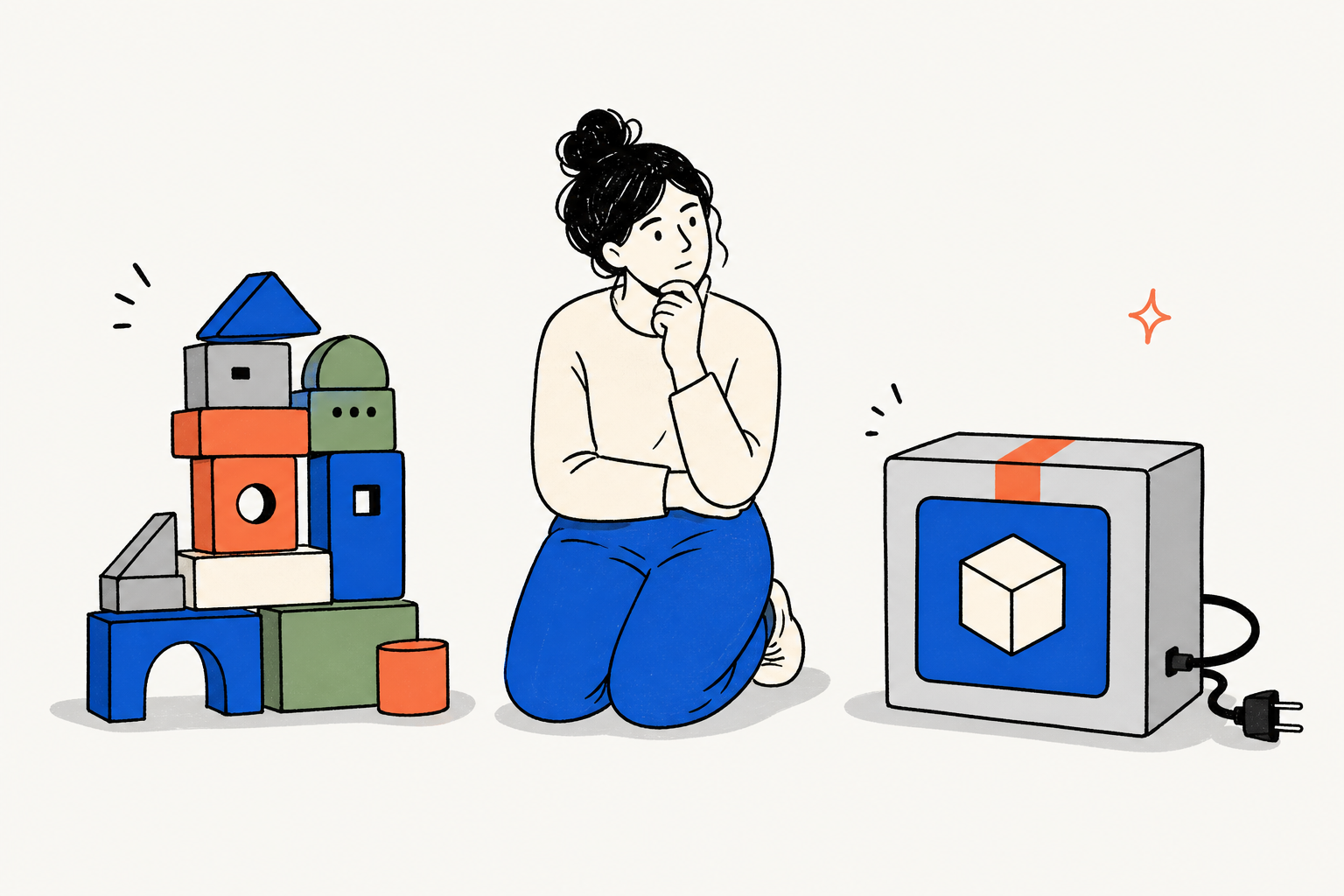
A few years ago, "should we build this software or buy it?" was a question you needed a CTO to answer, and the answer was almost always "buy it — building is expensive." That question just changed, because building got cheap. You, personally, on a weekend, with a tool like Lovable or Bolt or a no-code builder, can now stand up an internal app that would've cost you a developer and three months. That's not hype. That's just true now.
Which means the old answer ("always buy") is wrong — and the new temptation ("build everything, it's free now!") is also wrong, just in a more expensive way. Here's the catch the weekend-demo high hides: building the thing was never the hard part. Owning it is. The tool you bought has a company behind it whose entire job is keeping it alive — patching it, securing it, answering the phone when it breaks. The tool you built has you.
So you need a way to decide that takes about ten minutes and doesn't require a CTO. Here it is. Four questions. Answer them honestly.
1. Is this your edge, or is it table stakes?
Some things make your business yours — the specific way you quote a job, the workflow your customers love, the thing competitors can't copy. Everything else is plumbing: email, scheduling, invoicing, the stuff every business needs and no customer praises you for.
Build your edge. Buy your plumbing. If the thing you're tempted to build is plumbing, someone has already built it better, debugged it for a decade, and will keep it running while you sleep. Buy it and move on.
2. Who maintains it at 2 a.m.?
This is the question that kills most build decisions, and it's the one excitement skips right over. When the tool you built breaks — and software breaks — who fixes it? If the honest answer is "me, the owner," you've just made yourself the on-call engineer for your own company. That's fine for a weekend toy. It's a trap for anything your team depends on to do their jobs.
If you can't name a person — not "the AI," a person — who owns this thing's uptime, you're not ready to build it. You're ready to buy it.
3. What breaks if it's wrong?
AI tools are confident even when they're wrong. So ask: when this tool makes a mistake — not if — what's the blast radius? A tool that drafts internal notes? Low stakes, build away, mistakes are cheap. A tool that emails customers, moves money, or touches anything regulated? High stakes, and the bar for building your own goes way up. "I made it in a weekend" is not a reassuring sentence to say to a customer whose data just leaked.
4. Is this a feature or a system?
A feature is one thing that does one job — a calculator, a form, a dashboard that reads from one source. Features are great to build: small, contained, easy to replace. A system is the "one place where everything lives" dream — many features, lots of data, everyone depending on it. Systems are where weekend builds go to die, because a system isn't a project, it's a commitment with a maintenance bill attached.
Build features. Be very, very slow to build systems.
The 10-minute version
- Edge, not plumbing? → leans build.
- A named human owns 2 a.m.? → safe to build.
- Cheap if it's wrong? → safe to build.
- A feature, not a system? → safe to build.
Four yeses: build it, and enjoy it — this is genuinely one of the best things about this moment. Mixed answers: build a small version, keep buying the rest. Mostly noes — especially a high-stakes system only you can maintain — buy it, and spend the weekend you just saved on the part of the business only you can do.
The new superpower isn't that you can build anything. It's that you can finally tell the difference between what's worth building and what you were only building because you could.
Build your differentiator. Buy your plumbing. The owners who win this era build the right one thing and let someone else lose sleep over everything else.